
Combine and Game Highlights: How to Pair Them for Coaches

Combine footage shows how fast, high and quick your athlete tests. Game highlights show how those traits turn into plays. Coaches want both, and they trust the game clips more. The strongest package is a short set of verified combine numbers next to clean, single-player game video. That second half is the part most families struggle with, because it means someone has to film the game while also watching it. An automated tracking camera such as I-TRX solves that: the player wears a small sensor, the camera follows that one athlete, and the highlights land on your iPhone while you cheer from the sideline.
This guide explains what “combine highlights” and “game highlights” each prove, how evaluators weigh them, and how to put both in front of a coach without turning every weekend into a filming shift.
What combine highlights are, and what game highlights are
A combine is a standardized testing event. Every athlete runs the same drills under the same conditions, so the numbers can be compared fairly. In football, NCSA lists the six standard tests: the 40-yard dash, the 5-10-5 shuttle, the 3-cone (L) drill, the vertical jump, the broad jump and the bench press rep test. Basketball combines add agility and shooting work, and scrimmages.
Combine highlights are the clips from that day: a sprint, a jump, a drill, sometimes a scrimmage stretch. They document testing, not competition.
Game highlights are the opposite. They show your athlete in live play, with a defender closing, a teammate open and a decision to make. Nobody can fake that with a stopwatch.
Here is the simple difference:
Combine footage | Game highlights | |
What it proves | Measurable athleticism | Skill, instincts, decisions |
Who controls the conditions | The event organizer | Nobody, which is the point |
Typical content | Sprints, jumps, drills | Your athlete’s best plays in real games |
Best use | Verifying numbers a coach can trust | Getting a coach to keep watching |
Because the two answer different questions, they work best as a pair. GetRecruited describes combines as the source of the verified numbers coaches screen on, and game film as the foundation of evaluation, since it shows how a player competes over full drives and not just a montage.
How coaches and scouts weigh the two
If you have ever wondered whether a great 40 time can carry a player, the people who evaluate for a living have a consistent answer: film comes first.
Former NFL scout Paul Beckwith says about 90% of a player’s grade comes from game film, medical reports and the personal interview, with the combine acting as a live audition of athleticism. Broncos coach Vic Fangio put it a similar way in 2020: evaluation is mostly what you see on tape, and how fast a player looks on tape matters more than the stopwatch.
Basketball sees it the same way. NBC Sports’ Kurt Helin wrote in May 2026 that combine measurements matter far less than what scouts and executives have already seen in person and on tape from games and practices. The combine moves the needle most further down the board, where a strong showing can lift a player.
Those are pro-level examples, but the logic scales down to high school recruiting. A coach reading an email from a 15-year-old uses the same shortcut: do the numbers match the film?
Why film has to confirm the numbers
The Athletic’s Ted Nguyen reviewed the 2024 combine class against game tape. A Texas receiver’s 4.2 forty showed up on film as quick separation. A Penn State tight end’s 4.57 forty and 39.5-inch vertical, both high percentile marks, did not match the burst he showed in games. Scouts were asking one question: does testing speed show up at game speed?
That is exactly why NCSA advises athletes to send combine numbers to coaches together with a highlight video and game film, so the coach can confirm the measurables match what happens on the field.
A research team writing in the Journal of Expertise analyzed 20 years of NFL Combine data. They found single measures were often the best predictors for offensive positions, while combinations of traits predicted success for defensive positions. They also noted that game film is subjective: players can look better against weaker competition or on faster surfaces. Combine numbers and game clips each cover the other’s blind spot.

What the pro combines look like, in case your athlete is watching
Young athletes love combine highlights, and watching them helps explain what the numbers mean. Both leagues post official video.
NFL: The 2026 NFL Combine hub lists the fastest official 40-yard dashes with video of each run, led by Brenen Thompson at 4.26 seconds, Lorenzo Styles Jr. at 4.27 and Zavion Thomas at 4.28. NFL.com also has a Simulcam best-moments video with individual drill results.
NBA: NBA.com hosts an All-Access video from the 2026 Draft Combine covering drills, measurements and breakout moments. The league’s combine throwbacks collection goes back to Stephen Curry’s 2009 lookback and includes Keon Johnson’s 48-inch max vertical from 2021.
The 2026 NBA Draft Combine in Chicago brought together 73 players for agility testing, shooting drills, interviews and two days of scrimmages. Not everyone played 5-on-5. That detail matters for your family: even at the top level, the combine is only one slice of the evaluation.
Use these clips as teaching tools. Pause a 40-yard dash and ask your athlete what the first three steps look like. Then compare that to their own game footage.
How to build a combine and game highlights package, step by step
Here is the routine, from the first clip to the email.
Collect verified combine numbers. Combines are run by third-party organizers, which is why coaches trust the results. Write down the official times and measurements. Keep a link to the event’s results page if there is one.
Save the combine clips. Keep short clips of the drills themselves: the start of a sprint, the jump, the shuttle. Keep them separate from game video. Testing footage documents measurables, and mixing it into a game reel confuses the story.
Capture every game, not just the games you think will be good. Highlights come from volume. The play that makes the reel is often in a game where nothing else went right. This is the step where families fall behind, and we cover it in the next section.
Pick two or three plays to lead with. Coaches decide fast. Our highlight video checklist walks through opening with the two or three plays that show your athlete’s best traits before anything else.
Keep the reel short. Aim for a few minutes at most. Our guides on the 3 to 5 minute recruiting video format and on highlights coaches actually open explain how to structure it and how to send a clean link.
Add full-game film as backup. The highlight reel shows the ceiling. Full-game film shows consistency and effort. Have it ready if a coach asks.
Put the numbers and the links in one email. Lead with the position, grad year and key measurables. Then give the highlight link, the combine results and the game film. Each piece should be one click away.
Check the requirements for your level. College recruiting video rules differ by sport and division. Our overview of NCAA recruiting video requirements in the U.S. is a good place to start before you send anything.
Steps 1 and 2 happen at an event, and steps 4 through 8 happen at a computer or phone. Step 3 is the one that eats your weekends.
The hard part: clean game highlights without filming by hand
A parent who films a game is a parent who misses it. You hold the phone, you chase the ball, you zoom in late, and you still lose the play that mattered because a pass went the other way. Wide-angle footage from the fence solves the “missed it” problem but creates another one: your athlete becomes a small figure among twenty others, and a coach has to hunt for number 14.

Coaches evaluating one athlete need that athlete in frame. That includes the off-ball moments, which often say more about a player’s habits than the touches do. Our guide on off-ball movement video explains what to look for and why a tracking approach captures it.
How I-TRX handles the filming
I-TRX is an automated tracking camera system for outdoor youth sports. The athlete wears a small sensor pack, and the AI-controlled camera follows that player and zooms in automatically. It tracks one athlete, so the footage follows your child regardless of where the ball goes or how the team moves. The video records to your iPhone.
A few features matter most for a highlights workflow:
Instant highlight saving. Highlights are saved to your iPhone in real time and can be shared right away, with no manual editing.
Ultra Highlight Pro. It buffers past play, so a moment you only recognize as great after it happens is still captured.
Full game or session recording, and delayed solo recording. You can record a whole game for film, or use the delayed solo mode for individual sessions.
No monthly fees. It is a one-time purchase, with the app included.
The result is a library of single-player clips from every game, which is what a reel needs. If you want to see how the phone side fits together, our guide to two iPhone sports video workflows for recruiting clips lays it out. For families who want to review a game and not just send it, see how youth sports video analysis turns the same footage into 3 to 5 minute reels.
The point is simple. Combine day gives your athlete the numbers. Game video gives those numbers meaning. An automated camera means the game video exists for every game, with you in the stands.
Get the whole season on video with I-TRX
The I-TRX Automated Player Tracking Camera costs $849, one time, with no monthly fees. It includes the camera system, the sensor pack and the app. You set it up, your athlete wears the sensor, and you watch the game. See the I-TRX camera and pricing.
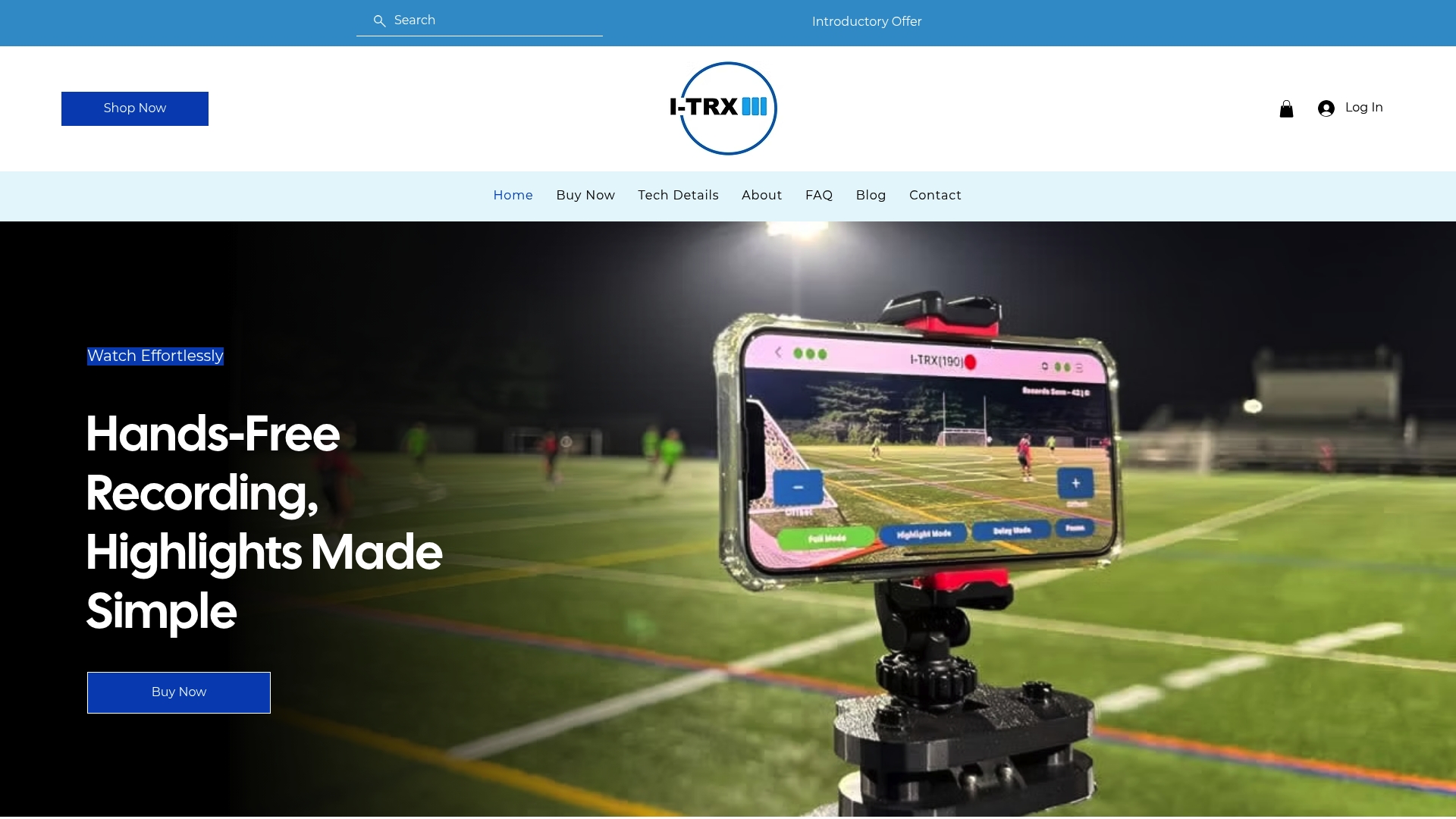
If your athlete plays soccer, the soccer recording camera page shows how the system follows one player through a match. For a closer look at how the tracking works, the tech details page goes deeper.
Our view: the combine is a snapshot, the season is the story
Parents ask us how to make a combine day count. Our honest answer is that the combine is one afternoon, and a recruiting story needs a season. Numbers are useful because they are checkable. But a coach who sees a fast time wants to know what that speed looks like when a game gets messy. That answer lives in game video, and game video only exists if somebody captured it. That is why we built I-TRX around one athlete. Wide shots of the whole field are fine for a team recap, but a recruit needs the camera on them. A sensor on the player means the camera knows who to follow, and Ultra Highlight Pro buffers past play so the great moments you did not see coming are still saved. We also built it so parents can be parents. Set it and forget it, then enjoy the game, and find the highlights on your iPhone afterward. No monthly fees, no editing marathon, and no camera chase. Bring your combine numbers. We will help you bring the film that shows what they look like in a game. John
Frequently asked questions
Do combine results matter more than game film?
Game film generally carries more weight. Evaluators describe film as the main input and the combine as a check on athleticism. Verified numbers still help, because they show a coach that the speed or jump they see on tape is real.
Should I put combine clips in my athlete’s highlight reel?
Keep them separate. A highlight reel shows live play, and combine footage documents testing. Send the combine numbers and clips alongside the reel and game film so the coach can see each one on its own terms.
Can the public attend the NFL Combine?
Yes. SI.com reported that no tickets were required in 2026 at Lucas Oil Stadium in Indianapolis, but fans had to register for NFL OnePass and show a QR code to enter. On-field testing in 2026 ran over four days at the end of February and the start of March, split by position group. Check NFL.com for the current year’s schedule.
How can I record my child’s highlights without filming the whole game myself?
Use a camera that follows your athlete on its own. I-TRX pairs a wearable sensor with an AI-controlled camera that tracks one player, zooms automatically and saves highlights straight to your iPhone, so you can watch the game without holding a phone.
Sources
Different from the standard six tests: Find a Football Combine Near You (NCSA)
Assessing NFL Combine Drills with Paul Beckwith and Pro Scouts (SimpliFaster)
NFL teams rely on tape with virus altering pre-draft routine (iNFOnews)
2026 NBA Draft Combine: Measurements of star players, notes on standout performances (NBC Sports)
Reviewing combine stars: What physical freaks’ game film shows (The Athletic)
10 players who made a mark at AWS NBA Draft Combine 2026 (NBA.com)
When Indiana Football Players Will Perform at NFL Combine (SI.com)
Comments